 Written by
 Two houses on Warwick Square – 15 & 16 Warwick Square
My name is Guy Wilson-Weststrate. I lived at 15 Warwick Square for the first half of the 1970s and at 16 Warwick Square for the second half of the 70s.
Warwick Square will always hold special memories for me. I was 16 years old when Bill, who had lived on the 2nd floor of 15 Warwick Square since the mid-1960s, rescued me from a damp, mouse-infested bedsit in Finsbury Park and became my substitute parent, guide, guardian and support throughout the decade. It was the first home in my life where I felt safe.
The flat in 15 Warwick Square was still just two huge rooms of the original dimensions with a bath in the kitchen. Halfway through the 70s, we were offered the flat on the 2nd floor of 16 Warwick Square which had been adapted and modernised and we had a proper bathroom and separate bedrooms.
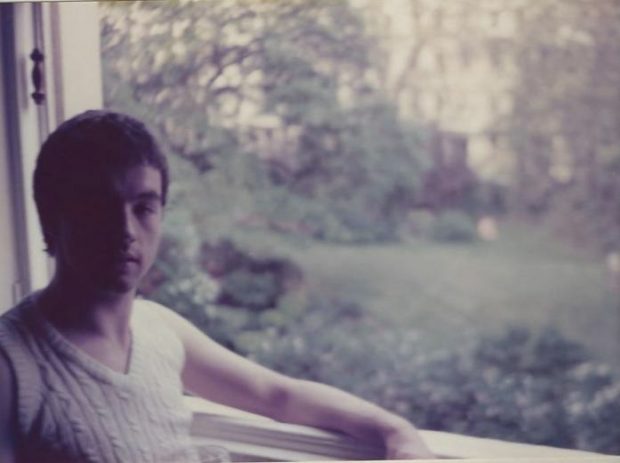
I left in 1979 to spend six months backpacking in Mexico before returning and going to university.
On my very rare trips to London from my home in the Netherlands I try to walk down Warwick Square. I feel like a ghost. I love it. The last time was about 3 or 4 years ago and strangely both 15 and 16 were under scaffolding.
One of my hobbies in retirement is family history, but my own tree is more or less complete, so I like to look at where I’ve been and who was there before me. Sometimes, I get to know who was there after me as well. It’s all human stories, and I’m an actor and writer, so…
15 Warwick Square, 1843 – 1939
1843 – 1853
Warwick Square was laid out in 1843 and took approximately 25 years to complete.
In the early days of the building of many of the squares in Belgravia and Pimlico, there were difficulties in attracting the ‘right sort’ of occupants. Aristocratic, monied people did not want to move into the grand houses while the rest of the developing square was a building site, and further problems were caused by the threat of squatters breaking in and occupying the newly completed empty houses. Many of the houses were therefore occupied on an official basis, presumably at a lower rent in exchange for acting as ‘caretakers’ because of the building site, by working people.
The first recorded occupants of 15 Warwick Square, according to the 1851 census, lived in three sets of rooms.
One set of rooms was home to George Todd, 45, born in 1806 in Scotland, and who worked in a variety of jobs. When he was living at 15 Warwick Square he was a stationer. His wife Margaret (nee Benson), 38, was born in 1813 in Clerkenwell. George and Margaret were married in St. Mary’s Church, Upper Street, Islington on 31 May 1848, when George was working as a cheesemonger. Both their deceased fathers had been farmers. George was 42 and Mary was 35 and neither had been married before. They remained childless.
George died in 1854 and his body was returned to Scotland for burial. Margaret spent her widowhood living with the family of her elderly cousin at 34 Albert Street, Islington, and earning her keep as their housekeeper. She died aged 58 in 1871.
George and Margaret had a maid in 1851, Ellen McDonald, 18, born in 1833 in Westminster. Evidence of Ellen’s life is sparse. Before finding employment at 15 Warwick Square, she had been a workhouse inmate at the age of 13, and by 1861 she was working as a maid to another childless couple on Marylebone.
In another set of rooms at 15 Warwick Square in 1851 lived Margaret Martin, 28, born in 1823 and her sister Mary, 17, born in 1834. Both were lace makers from Ireland. Irish women named Margaret and Mary Martin, born in the 1820s and living in London by the 1840s and 50s are too numerous to ensure the correct information. It is likely that they, and approximately 750,000 others, left Ireland for England to escape the famine that was decimating their home country at the time. (Another two million went to America and Australia.)
Another part of 15 Warwick Square was occupied in 1851 by Mary Parsons (nee Cutter), born in 1791 in Hereford. In 1841, Mary and her husband Edward had already been married for 30 years. Edward was working as a messenger, and was living with Mary and their five children in Dartmouth Street, not far from the future Warwick Square. Their family started relatively late, they had been married 14 years and Mary was 34 when their first child was born. They were Louisa (1826), Mary (1827), Elizabeth (1826), Frederick (1831), and Henry (1833). Edward died two years after the census, aged 55 in 1843, leaving Mary and the children to fend for themselves. The daughters were already working as seamstress apprentices or milliners. Frederick started work as a solicitor’s clerk.
Louisa left Warwick Square in 1853 to marry a jeweller. They were married for 27 years and remained childless. Louisa’s sister Mary’s life is difficult to trace. It seems she may have worked her whole life as a dressmaker and died unmarried in her 70s. Elizabeth, likewise, remained unmarried and went into domestic service after leaving Warwick Square. Frederick evidently did not stay in the legal profession. He was registered in 1871 as a ‘traveller’ or a salesman of some sort. He was living with his sister Louisa and her husband, and his mother in Kings Road, Holborn (now Kingsway). He died unmarried aged 48 in 1879.
Henry was not living at Warwick Square with his mother and siblings in 1851 but was lodging in a catering establishment in Charing Cross Road where he was employed as a porter. He married in 1861 when he was working as an oil and colour man (a seller of lamp oil and a mixer colours either for dyes for use on textiles or for house painters). He continued in this line of work for the rest of his life and died, a 67-year-old widower in 1900.
Mary, the mother, having been born in 1791, lived long, moving homes between her friends and her children, she eventually checked in to the Holborn Workhouse for destitute people on 11 Jun 1886, where she died on 16 Jan 1887 aged 97. By the time Mary, one of the first inhabitants of 15 Warwick Square, died penniless in the workhouse, the whole of 15 Warwick Square was occupied by a married couple, with one son, another child on the way and eight live-in staff.
1868 – 1919
The history of 15 Warwick Square goes dark from when Louisa Parsons left to get married in 1853. The 1861 census for the house is missing. However, the house comes back into the light in 1868.
The first family to occupy the whole of 15 Warwick Square were Arman and Geraldine Lowry-Corry.
Arman Lowry-Corry and Geraldine King were married at St. Peter’s Church, Eaton Square on 8 February 1868 and moved into 15 Warwick Square. When they married, Arman was 31 and Geraldine was 21.
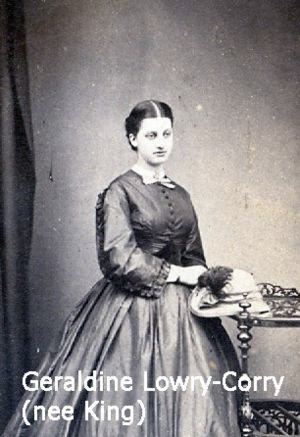
Arman was from Irish aristocracy, his father being the third Earl of Belmore. Born in Lower Brook Steet, London on 25 May 1836, Arman was brought up in various country houses on the Isle of Wight and England when he wasn’t at boarding school at Harrow. Just before his marriage Arman was living at Hinchingbrooke House, Huntingdon, Cambridgeshire with Montague cousins of his mother’s, and the ancient and renowned Louisa, Dowager Countess Sandwich (Louisa Mary Anne Julia Harriet Montagu, Countess of Sandwich (née Lady Louisa Lowry-Corry) (3 April 1781 – 19 April 1862)).
The title of Earl of Belmore passed to the eldest son, Arman’s brother Somerset. As was customary in such families, the second son was often expected to go into the armed forces. Arman thus went into the navy, eventually retiring as an Admiral and is listed in official documents as ‘The Hon.’
Geraldine was born in Staunton Court in Hereford (in 2025 operating as a B&B) the daughter of an Oxford-educated clergyman. Her maternal Scottish grandfather had been Advocate-General, President of the Council, and Acting Governor of the Island of Granada in the West Indies.
Arman and Geraldine had eight children at 15 Warwick Square, and Arman lived there with a large changing staff for almost forty years.
The eight Lowry-Corry children born at 15 Warwick Square were:
1. Arthur. 1869 – 1946. The first-born, Arthur, arrived on 21 February 1869 and was educated at Charterhouse with his brother Gerald, he left Warwick Square at the age of 18 and emigrated to the USA to work as a farmer. In 1897 he married Kate Elizabeth Bullen and they moved to the Los Angeles area. They were divorced in 1905 after which Arthur moved to Oregon and lived under his ‘own means’ with his housekeeper Wilhelmina (Minnie) Amelia Johns of German parentage from Wisconsin whom he married in 1913. They had no children, and Minnie died on 24 February 1935. A few months later, 66-year-old Arthur sailed back to England tourist class on the Aquitania (Cunard White Star Line), arriving in Southampton on 13 Sep 1935. He moved to the village of Manaton, Newton Abbot, South Devon where he died on 28 November 1946. In his will he left £2,490 11s. 7d. to his sisters Muriel and Evelyn
2. Gerald. 1871 – 1929. Gerald was born on 24 August 1872. After a short time in the army, Gerald converted to Christianity. He became a Catholic priest in his twenties and lived and worked at The Oratory in South Kensington for most of the rest of his life. Gerald served as an army chaplain during the First World War, up until 1920. The Reverend Gerald Lowry-Corry died in Halliford House in the village of Upper Halliford near Shepperton in Middlesex on 7 March 1929 aged 57 years. Once a private country house, Halliford House was described variously between 1841 and its demolition in 1957 as either an ‘asylum’ or a ‘lunatic asylum.’ Gerald was reported in the Catholica newspaper, ‘The Tablet’ on 16 March 1929 as having died of pneumonia. Gerald left £6,789, 17s 6d. to Ralph Kerr, Superior of the Congregation at the Oratory, and to Alexander Gilmour, his sister Muriel’s husband.
3. Rosamund Florence. 1873 – 1932. Born on 27 January 1873, Rosamund stayed at home and was still living at Warwick Square with her father when he died in 1919. In 1921 Rosamund was living in Cranbrook, Surrey, alone apart from a young live-in maid. There is little other documented evidence of what Rosamund did subsequently. She appears to have never even registered to vote. She died a ‘spinster’ at the age of 58 in The Firs nursing home in Sutton Coldfield, Birmingham. She left £4,785 13s. 11d. to her sisters Muriel and Evelyn.
4. Adrian. 1876 – 1921. Adrian was born on 11 February 1876 and was educated at Haileybury College between 1891-93, a fee-paying school with strong connections to the military. Thereafter he joined the army. He was commissioned 2nd Lieutenant West Kent Regiment on 4 Dec 1901 and was appointed Captain R.A.O.C. on 19 Jan 1904. He married Geraldine Hartcup, a solicitor’s daughter, on 11 Feb 1906 and lived in 2 Marine Parade, Towyn, Montgomeryshire, although his registered address for voting remained 15 Warwick Square. Adrian was promoted to Major in 1918. Adrian became the first of the 15 Warwick Square ‘children’ to die on 19 February 1921 aged 45. He died in the military hospital Ras el Tin in Alexandria, Egypt, leaving a 37-year-old widow and two young children. (Their son, Galbraith, became the 6th Earl of Belmore in 1949, the title which had passed from his grandfather’s brother via a series of Earls who died unmarried.) Adrian left £2,353 3s. 9d to his widow Geraldine. Their descendants still live variously in Ireland and the USA.
5. Muriel. 1877 – 1965. Muriel was born on 26 December 1877. She lived at home at Warwick Square until, at the age of 27, she married Alexander Wallace Gilmour at St Peter’s, Eaton Square on 4 Mar 1905. Alexander, born in India, had property in Belgravia. Indeed, in 1921 Muriel and Alexander were living at 4 Upper Belgrave Street, with no children, but a butler, a footman, a lady’s maid, a cook, a kitchen maid, a scullery maid, and two housemaids. Alexander had further property interests in Oxfordshire and Buenos Aires. Alexander and his family show up on several shipping passenger lists between Southampton and South America over several decades. Alexander and Muriel had two children. Muriel was widowed in 1946 when Alexander died aged 76 at the London Clinic, 20 Devonshire Place, W1. He left her £75,851 18s. 7d. Muriel lived for another 20 years, eventually moving to 59 Kingston House, Princes Gate and was the last surviving and longest living of the 15 Warwick Square ‘children’, dying (very rich) at the age of 87 on 5 June 1965. Muriel’s line died out when her unmarried childless son died in 1982 aged 74 and her widowed childless daughter died aged 87 in 1993.
6. Evelyn. 1879 – 1947. Born on 12 November 1879, Evelyn, like her sister Muriel, lived at home at Warwick Square until she was 27. She married Charles William O’Conor, a barrister’s son or private means, in the spring of 1907. The wedding took place at the Oratory, South Kensington and was officiated by Evelyn’s brother. Gerald. (Queen Magazine of 11 May 1907 has a very detailed description of the bride’s dress!) Evelyn and Charles lived frugally in comparison to the large domestic staff employed by her parents and sister. They lived with only two live-in staff. They had two sons, Denis in 1912, and Roderic in 1913, both of whom lived until the end of the 20th century. Evelyn appears to have spent 1939-1945 in Herefordshire and doing not very much while her husband ‘land-managed’. She died in London aged 68, after which her husband went back to his native Ireland.
7. Hubert. 1881 – 1927. Hubert was born on 22 May 1881. As a young man, he lived and worked in Argentina, presumably with cattle and horses. He sailed back to England at the outbreak of World War One, arriving at Liverpool on the Royal Mail Steam Packet ship, the Vigo, on 28 Dec 1914. (No records of his war service survive. Many of the records were destroyed in air raids during World War Two.) Hubert was registered as a voter at 15 Warwick Square in 1918. On 19 Oct 1920 Hubert sailed to Mombasa on the British India Shipping and Navigation Company ship, the Nevasa. He was an assistant District Commissioner in Uganda where he died on 27 March 1927 aged 45. It took six years after his death to publish his will. He left £477 10s. 8d. to John Thomas Kennedy, an assistant livestock officer at the Meru Estate, Masaka, Uganda.
8. Walter. 1885 – 1946. Walter was the last-born Lowry-Corry child at 15 Warwick Square. He was born on 6 March 1885. He joined the army in August 1904 when he was 19 and was posted to India in October 1905. He became a Lieutenant in November 1906 and a Captain in August 1913. He served with the 23rd Cavalry throughout the First World War and became a Major in August 1919. He remained registered as a voter at 15 Warwick Square throughout the war. Walter appears to have been invalided out of the army in 1922. However, there is a shipping passenger list on which he is sailing back to India again in 1926, but maybe this was just to ‘close down’ his dealings in India because, by the following year, he was living alone in a flat in Albany Mansions, Latchmere Road in Battersea. At the outbreak of war in 1939 54-year-old retired Major Walter Lowry Corry was living in a flat in Glebe Road, Harrogate with 25-year-old Welshman, Lionel Coles, described as Walter’s cook/houseman. Also living with them is Lionel’s 57-year-old mother Gertrude, apparently separated from Lionel’s father who, at this time, was living back in Wales and working on the railways. Gertrude moved out in 1939-1940 but Lionel stayed with Walter until Walter’s death aged 61 on 15 October 1946. Walter left £495 16s. to his sister Muriel. Lionel disappears from official public records until his death in Wales aged 82 in 1996.
Meanwhile, back at 15 Warwick Square, Geraldine died at home on 8 January 1905 aged 58. She was buried in Kensal Rise Cemetery. Arman died at home on 1 August 1919 aged 82. In his will, Arman left £37,160 17s. to Mr Alexander Wallace Gilmore (born in Darjeeling, India, of private means, of Newington House, Oxfordshire and Belgravia, husband to his eldest married daughter, Muriel), and Mr Charles William O’Conor (Herefordshire land manager, MP, Freemason, Reform and Athenaeum Clubs, husband to his other married daughter, Evelyn.)
The Lowry-Corry family had occupied 15 Warwick Square for almost forty years, but not without the support of their domestic staff.
Staff at 15 Warwick Square in 1871
The Lowry-Corry family, being aristocracy, were unable to cook for themselves, dress themselves, clean their houses, or bring up their children without the support of their household staff. The family were too busy upholding the values of Queen/King, Country, and Empire, and being seen at all the best weddings and having their attendance and social activities reported in the newspapers and fashionable magazines to do anything worthwhile or useful in the house. Thus, there were usually more staff than family members in the house. In 1871 the young Lowry-Corry couple had just their two-year-old son Arthur, with baby Gerald on the way, but they also had eight members of staff! Unsurprisingly, the stories of these people are more difficult to find, even though these were the people who kept the wheels of empire rolling. These are those people:
- William Angell. (1841-1875) (15WSq c.1871-c.1874). The butler was 30-year-old William Angell (Sometimes recorded as ‘Angelo’). William was in domestic service since the beginning of his working life, first as an errand boy to a large family in Oxfordshire, working his way up to butler at 15 Warwick Square. On 10 January 1874, he married the housemaid, Eunice Rowlands (see below). Most domestic staff were required to be unmarried, so William left Warwick Square and found manual work on the railways. However, on 14 April 1875, his body was found in the River Thames. He is recorded as having drowned himself, being of unsound mind. He was just 34 years old.
- Richard Blackburn (1854-1940) (15WSq c.1871-?) was the footman at 15 Warwick Square. He was 18 years old, having been born in the Paddington area of London on 28 July 1854. Richard married Selina Booth in 1890 and the following year he was working as a porter at Whiteley’s department store in Bayswater. By 1901 Richard was living with Selina at 74, Oliphant Street, Paddington and working as a dentists porter. In 1933 Richard and Selina were living at 14 Westbourne Terrace and in 1935 they were at 80 Waverley Road, W2. In 1939 Richard was 85 years old and described as ‘incapacitated’ in Paddington Hospital. He died in January 1940. Selina lived for another 15 years.
- Lucy Stobbe (1830-?) (15WSq c.1871-?) 41-year-old Lucy Stobbe was the nurse at 15 Warwick Square. She was unmarried. Other than those facts Lucy appears to have left no other record of her life.
- Sarah Forche (c.1840-?) (15WSq c.1871-?) was the housekeeper. Aged 31 she had been born in Deptford in 1840. Like Lucy, she left little evidence of her life.
- 31-year-old Eunice Rowlands (c.1840-?) (15WSq c.1871-c.1874) was born in Shropshire to Welsh parents in 1840 and worked at 15 Warwick Square as a housemaid. There is no record of her working before Warwick Square. Eunice married the Warwick Square butler, William Angell in January 1874 but she was widowed when he drowned himself just 18 months later. Eunice was still calling herself Mrs. Angell, widow, in 1911. She was lodging in Childs Hill in Hendon where records describe the housing in the area as ‘a disgrace to civilisation’. Eunice registered to vote every year since she was permitted by law to do so (as she was over 30) in 1918. She died in 1926.
- Amelia Moss (1854-1941) (15WSq c.1871-c.1874) was born on 17 February 1854 to a dressmaker mother and a steam-boat stoker in the Cannon Street area of London. At 18 years of age, she was working as a kitchen maid at 15 Warwick Square. After leaving domestic service Amelia moved to Devon, married Henry Cawley, a bricklayer, had several children and died aged 87 in 1941.
- Born in Glasgow in 1840, Agnes Naysmith worked as a ladies’ maid at 15 Warwick Square. Ten years later she was still working as a ladies’ maid, but for another family in Kensington.
- 18-year-old Elizabeth Miles from Gloucester worked upstairs at 15 Warwick Square as a nursery maid. (Women such as those who worked at Warwick Square, like Elizabeth, Agnes and Lucy, and working women all over the country at that time were barely recorded unless they married and had children.)
Staff at 15 Warwick Square in 1881
Ten years later in 1881, the Lowry-Corry family consisted of parents Arman and Geraldine, and five children at home. Arthur was away at boarding school, but still at home were Gerald, 9, Rosamond, 8, Adrian, 5, Muriel 3 and Evelyn, 1.
Staff numbers had been reduced from 8 to 6. They were:
- The butler was 31-year-old Charles Webb, born in Cambridgeshire in 1850. It seems too much of a coincidence that Charles had a similar experience to Emma (see next entry) in that he left his job at 15 Warwick Square and seems to have spent the rest of his life from his 30s onwards in and out of workhouses around Westminster and Poplar. Were the butler and the cook dismissed for some kind of improper conduct? If so, they would not have been given references and they would not have been able to find other ‘respectable’ work with ‘respectable’ families. Most of the other inmates of the Westminster workhouse were registered as domestic staff (or ‘servants’), so such numerous staff were easily dismissible and hireable by upstairs families with social positions and ‘respectability’ to uphold.
- The cook was 47-year-old Emma Ardy, born in Downton, Wiltshire in 1834. It is unclear as to how long Emma worked at 15 Warwick Square, but by 1895, when she was in her early 60s, she was in and out of the Westminster Workhouse, often weekly, sometimes for a night or two, sometimes for a week or more. Her longest stay was between 28 November 1905 and 11 May 1908. Emma died in 1909 aged 75. Most people, especially unmarried women, who spent their working life in domestic service, never had a permanent home of their own so their only option for support when they were no longer able to work was to surrender oneself to the workhouse, which was never an easy option. The Westminster Workhouse closed in 1913, was used as a refugee centre during World War One.
- Ellen Vernon, born in Whitechapel in 1858, was the fourth child and first daughter of a family of eight children. One brother and one sister died as young children. The surviving children all went to school until they were 14. Two of Ellen’s surviving brothers worked together as clerks for a solicitor. Her surviving sister worked in domestic service for a year before she married and had children. In 1881, at 23 years of age, Ellen was a kitchen maid at 15 Warwick Square in 1881. Ten years later she was working for another family as a ‘general servant’ in Kensington. On 24 September 1892 35-year-old Ellen married 47-year-old widower George Harris. What happened next is unclear, but it seems that both George and Ellen remained childless, and that possibly they were living apart by the end of the century. However, her brothers and sister all had children, so it seems that the rest of Ellen’s life was supported and uneventful.
- 31-year-old ladies maid Esther Miles was born in Gloucestershire. It seems that she may not have been completely honest about her marital status or her name when she worked at 15 Warwick Square. It may be that her first name was Harriet and that she was married and the mother of one child. There is much confusion around the records of ‘Miss’ Miles.
- Emily Harris (1845-?) (15WSq c.1881-c.1911) was from the same village as cook Emma Ardy (see above.) Emily was born in 1845 and went into domestic service, first in a small household in Portsmouth at about 15 years of age, then at another small house in Frome, Somerset. By 1881 Emily was working at 15 Warwick Square and she stayed there for more than 30 years, well into her late 60s, working variously as a housemaid and kitchen maid. Like Emma Ardy and so many other old domestic servants, Emily ended her days in the parish workhouse.
- 21-year-old Florence Dent (1860-1940) from Worcestershire worked as the nursery maid at 15 Warwick Square in 1881. The daughter of a shoemaker and dressmaker, Florence left domestic service after a year to marry John Hill. John had worked in domestic service as a footman but opened a newsagent shop. He and Florence had three daughters. Florence was widowed in 1929 and lived to be 80 years old, dying in 1940.
Staff at 15 Warwick Square in 1891
When the 1891 census was taken all ten members of the Lowry-Corry family were in residence, the children ranging in age from Arthur at 22 to Walter at 6. The family had six members of staff, all women. They were:
- Elizabeth Barker, the cook. Elizabeth was 38 years old, having been born in Chelmsford in 1853. Public records feature thousands of women named Elizabeth Barker, including many who were born in Chelmsford in 1853/4. Unfortunately, this Elizabeth’s life records are all mixed up with the others.
- Sarah Ann Berry (1859-1931) (15WSq c.1891-c.1911) was born in Benington, Hertfordshire in 1859. She was the second child in a family of four. She had an elder brother and two younger sisters. Her father made boots and shoes. By the age of 21, Sarah was working as a nursery nurse for a family in Wimbledon and by 1891, at 31 years of age she was working at 15 Warwick Square as the nurse. She worked there for at least 20 years but by 1901, with the children all grown up, she had become a ladies’ maid. Sarah was still working as a lady’s maid in 1911, although by this time 38-year-old unmarried daughter of the house Rosamond, was the only remaining Lowry-Corry woman in residence. Where she was and what she did after 1911 has faded from view. Sarah died in 1931.
- Eliza Miles, aged 37, born in Somersby, Leicestershire in 1854 worked at 15 Warwick Square as a ladies’ maid in 1891. There were two adult Lowry-Corry women in residence at the time. Nothing else can be found about the rest of Eliza’s life.
- Emily Harris had been at 15 Warwick Square working as a housemaid for at least ten years by 1891. She is listed as number 5 in the 1891 section above.
- A second housemaid in 1891 was Rosina Markquick, 17 years old, born in Clerkenwell in 1874. On Christmas Day 1895 Rosina married William Taylor, a labourer. Rosina had two daughters but, by 1911, Rosina was describing herself as widowed even though her husband can still be traced up until at least 1939. After leaving service in Warwick Square, Rosina worked as an office caretaker/cleaner for at least 10 years. The date of Rosina’s death is unclear. Two Rosina Taylors born in London in 1874 are recorded as dying, one in 1915 and one in 1948.
- Emily Hendry (1874-1961) (WSq c.1891) was born in Woolwich on 14 December 1874. The middle of five children Emily’s Scottish father was in the Royal Artillery, so the children were all born wherever in the country he happened to be posted at the time. At 17 years of age, Emily was working as a nursemaid at 15 Warwick Square. She left domestic service and, by 1901, was a nurse with the Institute of Trained Nurses which had originally been set up to provide health care to the poor of Lincoln. On 1 October 1910 Emily married Alfred Laker. She was 35. He was 29 and worked as a ‘motor body trimmer.’ After their marriage Emily and Alfred lived with Emily’s parents in Twickenham. Alfred served in and survived the First World War after which Alfred and Emily had their own home at 22 Heathfield South, Twickenham. Alfred died aged 74 on 27 February 1955. Emily lived to be 86, dying on 18 January 1961. They had no children.
Staff at 15 Warwick Square in 1901
Ten years later in 1901, the Lowry-Corry family in residence were parents Arman and Geraldine, Rosamond aged 28, Muriel aged 23, Evelyn aged 21, and Hubert aged 19. To get them through the day they had seven staff. That’s almost one member of staff per family member.
The people who worked at 15 Warwick Square in 1901 were:
- The butler was 30-year-old Henry Pickering from Eltisley in Cambridgeshire. (How many Henry Pickerings have there been? It is impossible to be clear which is this Henry Pickering among all the others in public records.
- 21-year-old Irishman, John Coney, was the footman. There are just as many Irish John Coneys as there are English Henry Pickerings. John left 15 Warwick Square and worked his way up the servant’s ladder to become a butler. By 1911 he was still working as a butler, but it seems he may have been working through an agency, completing short-term or temporary contracts for families who did not need (or could no longer afford) a full-time butler. The house where John was living in 1911 was a rooming house in Marylebone, the tenants of which were all senior domestic free-lancing staff; butlers and ladies maids.
- Kate Strong (1874-1953) (15WSq c.1901-c.1911) was the Bridgwater, Somerset-born 27-year-old cook at 15 Warwick Square. Kate started her working life as a general domestic servant to a widowed inspector of schools, his schoolmistress daughter, and his mother-in-law. Kate worked at 15 Warwick Square for at least 10 years. She died close to her roots in Somerset, unmarried, aged 80 on 20 October 1953.
- By 1901 Sarah Berry had already been working at 15 Warwick Square for at least ten years, although by now she was no longer working as a nurse but as a ladies’ maid. (See no.2 in the 1891 section above.)
- Florence Fuett (or Frett) (1867-?) (15WSq c.1901) was a second ladies’ maid working with Sarah, helping the four adult women upstairs. Florence was 34 years old, apparently born in Wordsley, Staffordshire but there is absolutely no reliable trace of her in any public record other than the census for 1901 when she was at Warwick Square.
- Emily Harris had been working at 15 Warwick Square for at least 20 years by 1901. (Her details can be seen at no.5 in the 1881 section above.
- 22-year-old Beatrice Davey’s (1879-?) (15WSq c.1901) early childhood was spent with her unemployed, unmarried mother, her brother and their lodger, general labourer Charles Welham. By the time she was 10 years old, she was sent as a boarder to a girls’ school in Norfolk. Presumably, she was born legally illegitimate. No father is named on any of her records, and she was not baptised until she was ten years old. The baptism was probably a prerequisite of attending the ‘school’. By 1901 Beatrice was a kitchen maid at 15 Warwick Square. What happened next is lost in the mists of many other women named Beatrice Mary Davey.
Staff at 15 Warwick Square in 1911
Ten years later in 1911, the Lowry-Corry family in residence were just two; 74-year-old widowed Armar (Geraldine had died 6 years earlier), and 38-year-old unmarried daughter Rosamond. They still had 6 members of staff, although 4 of them were, by now, long-serving.
The people who worked at 15 Warwick Square in 1911 were:
- Yorkshireman George William Ashman (1876-1960), 34 years old, was the butler, and the first married member of staff to work at 15 Warwick Square. George married Frances Sarah Rainbow on 28 December 1908, when he was already living and working at Warwick Square. Frances had been born into service. She was a cook to a family in the Boltons in Kensington, but by 1911 she was running a respectable boarding house just around the corner from Warwick Square. George and Frances had two daughters and, when they were 6 and 1 year old, George enlisted in the navy for the duration of the First World War. By the outbreak of the Second World War George and Frances were living in Wembley with their adult daughters who were working as a telephonist and a hairdresser, (although Georgina, the telephonist, got married later in 1939. The other daughter, Margaret, never married, and died aged 88 in 2005.) Frances died in 1959 and George died the following year, aged 83.
- Henry Gilbert Gasson (1891-1965) was the 20-year-old, Sussex born footman at 15 Warwick Square in 1911. He married Lilian Oliver in 1913. After leaving Warwick Square Henry worked as a casual waiter (though the 1921 census records him as a casual wafer!) He was still in this line of work in 1939. Lilian died aged 73 in 1964 and Henry died aged 74 in 1965.
- Kate Strong had been the cook at 15 Warwick Square for more than 10 years by 1911. (See no.3 under 1901 above).
- Sarah Ann Berry, ladies’ maid, had been working at 15 Warwick Square for more than 20 years by 1911. (See no.2 under 1891 above).
- Emily Harris, now 62 years old, had been working as a housemaid at 15 Warwick Square for more than 30 years by 1911. (See no.5 under 1881 above).
- Beatrice Davey had been a kitchen maid at 15 Warwick Square for more than 10 years by 1911. (See no. 7 under 1901 above.)
The patriarch of 15 Warwick Square since the 1860s, retired Admiral Armar Lowry Corry died on 1 August 1919. The war was just over, the world had changed, and Warwick Square continued to change too. The household was disbanded, the staff dismissed and the house divided into flats.
Tenants at 15 Warwick Square 1921 – 1939
The last of the Lowry Corry family died in August 1919. The household disbanded, the staff dismissed and the house divided into flats. Living memory recalls that very little actual building conversion work took place. Even up until the early 1970s there was at least one flat in 15 Warwick Square with no bathroom. The two main rooms were still their original dimensions, one door from the bedroom onto the staircase was permanently locked and the other was used as the ‘front door’ to the flat and had a Yale lock. A small room (once a service room for staff?) overlooking the square had a sink, cooker, free-standing cupboard, and a bath with a cover over it. The toilet was in what was once a cupboard halfway up the stairs between one flat and the one above. When visiting the toilet one had to be careful to (a) not close the front door, and (b) remember to take the key just in case of getting locked out.
Using information from the 1921 census, electoral registers, passenger lists, trade directories, telephone directories, public records of births, marriages and deaths, etc. the picture of 15 Warwick Square in 1921 looks like this:
1921
- Edith Winstanley was the caretaker of the 15 Warwick Square flats which were owned and managed by the Belgravia Property Company just off the Haymarket. Edith was born in Kendal, Westmorland in 1872. She married her husband Goerge in Leeds in 1897. They moved to Derbyshire where George worked as a train driver, and they had three children. By 1903 they were living in Hornsey, London, where they had three more children. George died of a duodenal ulcer and peritonitis at the infirmary in St.Neots in 1910, leaving Edith a 37-year-old widow. She went back up to Derbyshire where she took up her first employment as a boardinghouse keeper before heading south again to manage 15 Warwick Square. She left Warwick Square before 1923 and lived in various places around north London until she died in 1941. In 1921 she had three of her children living with her at 15 Warwick Square.
- Jessie Isabel Winstanley was born in 1899 in Derbyshire. She worked as a housekeeper at 16 Warwick Square. Jessie married Arthur Baker, an electrician, but she died of pneumonia aged 31 in 1930.`
- Allan Winstanley was born in Hornsey, north London in 1903. When he was living with his mother at 16 Warwick Square in 1921 Allan was working as a fitter’s mate for Lester Barnes Co, Woolen Manufacturers in Holloway. In 1928 when he was 25 years old he married 41-year-old Vilemina Ruzickova in Hendon and by 1939 Allan was a fruiterer and greengrocer, back in Hornsey. He and Vilemina lived at 71 Upper Tollington Park and their telephone number was ARChway 3846. Vilemina is surprisingly difficult to trace, even on worldwide records.
- Maisie Winstanley was born on 11 June 1908 in Hornsey. She married Bernard Mears, a solicitor’s managing clerk in 1933. Bernard served as a major in Burma, was captain of the Blackheath golf club, a keen swimmer and an ‘all round sportsman’. Bernard passed his law exams in 1937 and became a fully qualified practising solicitor. He hit the Daily Telegraph in November 1969.
Maisie and Bernard had one daughter and Maisie lived to be 91.
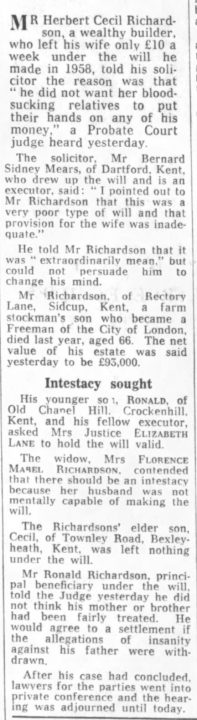
In other parts of 15 Warwick Square in 1921 lived:
- Emma Helena Garnham (1888-1939). (15WSq c.1921-c.1933) Emma had been a student at Bedford College, one of the first colleges to award degrees to women. She attended between about 1908 and 1911 but records are imprecise as to what she studied. Whatever it was it stood her in good stead as records show that in later years she was living by ‘her own means’ in that she did not work but she had sufficient income to live in some comfort. At the beginning of the 1920s Emma was living in Belsize Park later in the year she moved to 15 Warwick Square, to be joined later by other members of her family. Emma stayed at 15 Warwick Square for 10 years until about 1933 when she moved to 12 Warwick Square. By 1937, however, Emma had moved to Lower Sloane Street, then, at the outbreak of the Second World War she left London and moved to Weston-Super-Mare where shortly afterwards, late in 1939, she died aged 50.
- Aileen Garnham (1893-1971). (15WSq c.1921-c.1932) was Emma’s sister (see above). Younger than Emma by 4 years, she was born in Paddington in 1892 but their father died when she and her two older sisters were small children. Her mother remarried two years later, and Aileen and her sisters welcomed a stepbrother, Leslie, in 1899 and another, Stanley in 1903. Both Leslie and their stepfather were killed in war action in France in 1916. Aileen lived at 15 Warwick Square for about 8 years and worked as a stenographer and bookkeeper. After she left 15 Warwick Square in about 1932/3, she lived until at least 1946 at various addresses in the Warwick Square area with Florence Warren whom she had met in 1929 when Ms Warren moved into one of the other 15 Warwick Square flats. Aileen died in 1971.
- Stanley Hogg (1903-1970) (15Wsq. c. 1921-c.1929) Stanley was born in Eastbourne in Sussex in November 1903. He left home to travel in 1929 and married the following year when he moved out of 15 Warwick Square to live with his wife in a flat in Albany Mansions, Battersea. Stanley worked in clerical functions and at the outbreak of World War Two he and his wife were living in Maidenhead. They travelled to Canada for a couple of weeks in 1956. Stanley died aged 67 in 1970, leaving his wife comfortably off for the rest of her 25 years of widowhood.
Elsewhere at 15 Warwick Square in 1921 were:
- Lewis Iggulden Backhouse Hulke (Lt Col). (1867-1925) (15WSq c.1921) This magnificently named man was an officer in the Yorkshire Light Infantry among other regiments during his long army career. Therefore, he was a commanding officer during Horace Pewsey’s (see below) service in the same unit. A surgeon’s son, Lewis was privately educated at King’s School, Cambridge. He married Lousie Helena Mary Treanor, a chaplain’s daughter in 1895; the newspapers reported it enthusiastically as a ‘fashionable wedding’ and at great length. The couple spent some time in India and had a daughter there. They lived at 15 Warwick Square for no more than a few months around 1921 before he died in Kent in 1925 aged 58.
- Lousie Helena Mary Hulke (nee Treanor) (1870-1953) was born in Torquay. She and Lewis were not long at 15 Warwick Square.
1923-1924
- Joseph Bliss (1873-1923). (15WSq 1923) and Mary Bliss (nee Tucker 1883-?) Although Mary was Scottish-born, she and Joseph had both lived in and around Pimlico most of their lives. He worked as a chimney sweep. Joseph and Mary were married in 1912 and continued to live in various addresses in Pimlico until they moved into 15 Warwick Square sometime in 1922 or 1923. Unfortunately, they were only there a few months before Joseph died on 8 September 1923 at the age of 50. What happened to 40-year-old widowed Mary is difficult to deduce. She certainly moved out of Warwick Square almost immediately after her husband’s death, and it seems likely that she reverted to her pre-married name, Tucker.
- Sisters Aileen and Emma Garnham were still in residence.
- Horace Cecil Pewsey (1886-1971) (15WSq c.1921-c.1926). Horace had no father at home, but his mother ran a lodging house in Worthing for many years while Horace at 15, the youngest of six children, studied to enter the civil service. The lodging house in played host to several telegraph operators with the civil service and was proud to boast a genuine Italian waiter. One of Horace’s sisters described herself at this time in the 1911 census as ‘authoress and lawyer.’ Horace’s mother died, and war was declared within months of each other. Horace joined the army immediately and became a captain with the Yorkshire Light Infantry. He survived the war, and his name appears on the London University Roll of Honour. Horace and his wife Gladys (a Yorkshire woman) were married in Halifax, Yorkshire in 1919 and Horace remained in the army. They moved down to London, and 15 Warwick Square in about 1921 and stayed there until about 1926. They moved to Reading at some point before 1939 and then up to Gladys’s native Yorkshire where they remained for the rest of their lives. He died in Whitby in 1971 aged 85.
- Gladys Mary Pewsey (nee Stonehouse) (1888-1970) (15WSq c.1921-c.1926). Gladys appears to have been an ‘army wife’ who followed her husband where his postings took him. She and Horace had no children.
- & 6. Henry Alexander Russell (1877-1951). (15WSq c.1923-c.1926) and Ada Emily Russell (nee Dashwood) (1872-?) (15Wsq c.1923-c.1926) were married in Kingston, Surrey on 15 April 1901 when he was 24 and she was 28. Having come from a naval family, Henry also did a stint in the Navy before becoming a civil servant. Ada’s father died when she was young, and she spent some of her childhood in a boarding school. Henry and Ada had a son in 1907 and they were living in a first-floor flat in Streatham where they were comfortable enough to employ a live-in maid. Henry and Ada’s son, also named Henry, grew up and moved to New Zealand, then Singapore. At about this time, 1923, Henry and Ada moved to 15 Warwick Square and stayed there for about 4 years. Henry Jr. married in Singapore in 1932 but was killed there in war action in 1942 when Henry and Ada were in their 60s. They both died in the 1950s but death records for Henrys and Adas named Russell are too numerous for certainty.
1925-1926
1 & 2. Sisters Aileen and Emma Garnham were still in residence.
- Emma Hogg (nee Wheeler) (1866-1933) (15WSq c.1925-c.1933) Emma was the mother to Aileen and Emma. Emma was born in central London and baptised at St Clement Dane’s church on the Strand. A licensed victualler’s daughter, Emma married another licensed victualler, Henry Garnham, in 1888 and they had three daughters (including Aileen and Emma above). When they were living in Sutton, Surrey in 1898, Henry died of tuberculosis and pneumonia. He was just 33, leaving Emma a 32-year-old widow with three children aged 8, 6 and 3. Two years later Emma married William Hogg, a widowed accountant, with whom she lived in Upper Holloway and had two sons, Leslie and Stanley. However, in the 1911 census, Emma and William are registered separately, comfortably it seems, each with domestic staff and a selection of children and stepchildren. Emma was in Willesden and William was in Selsey on the coast, so perhaps it was a short holiday by the sea for health reasons. By 1916 they appear to be living together in Brondesbury. Emma and William’s son Leslie was killed in war action in France in February 1916 and William died of cirrhosis of the liver and heart failure two months later, aged 46, leaving Emma widowed for a second time. By this time, Emma’s daughters were adults. One wonders if they, like so many other young women, lost fiancées to the First World War, or if they chose to be academic, professional women. Choices, as we know, were limited for women at the time. Emma’s surviving son Stanley, was 12 years old when his father died. Emma appeared on the electoral register for 15 Warwick Square from 1925, along with son Stanley who had just reached 21, the age of majority at that time and therefore eligible to vote. Emma spent the rest of her life at 15 Warwick Square and died aged 66 in 1933. She was buried in Highgate Cemetery.
- Marion Victoria Hammond (nee Dolman) (1887-1969) (15WSq c.1925-c.1931). Marion, a joiner’s daughter, was born on 27 February 1887 in the King’s Cross area of London. She went into domestic service, and in 1911 was a cook and general servant to the family of a ‘Colonial Civil Service Secretary’ in Clapham. After the war in 1919, at the age of 32, Marion married John Henry Hammond and they moved together to an address in Emu Road, Battersea. A couple of years later they moved to Pimlico, and in or about 1925 Marion moved into 15 Warwick Square. The fact that only Marion and not John is registered as a voter may indicate that John was still in the armed forces or away from home for some other reason. Marion is seen to be alone at 15 Warwick Square for about two years. Incidentally, when Marion was a child and in domestic service, she was known as Mary Ann. She ‘re-branded’ to Marion after her marriage. In about 1932 Marion and John moved from 15 to 12 Warwick Square and, a year later, to 116 Belgrave Road. By the outbreak of the Second World War they were living at 50 Belgrave Square. She was widowed in 1948 at the age of 61 and she lived on until 1962 when she died aged 82.
- & 6. Horace and Gladys Pewsey were still in residence. (See above.)
- & 8. Henry and Ada Russell were still in residence. (See above.)
1927
There were 7 registered voters in 15 Warwick Square in 1927.
- – 4. Sisters Aileen and Emma Garnham were still in residence along with their mother Emma Hogg and their half-brother Stanley Hogg.
- Marion Hammond was still in residence. The two married couples Horace and Gladys Pewsey and Henry and Ada Russell had moved on. In their places were:
- Edward W. Crawford (1879-?) (15WSq c.1927-c.1946) Edward served during World War One with the 9th Royal Inniskilling Fusiliers and the 2nd Royal Inniskilling Fusiliers and, formed immediately after the war, the Corps of Military Accountants. He appears to have been a career soldier. By 1927, when he moved into 15 Warwick Square, he was in his late 40s, describing himself as an unmarried retired colonel. He continued to live alone, working during his retirement as a chartered accountant in Coleman St, EC2. He remained at Warwick Square throughout the war and at least into 1946. Nothing more can be found about his life.
- Lionel Boulton (1881-1954) (15WSq c.1927-c1928) Lionel, an ecclesiastical sculptor’s son, was born in Cheltenham in 1881. He went into the army and worked as a navigation officer with the British India Service. It must have been a positive experience because after he was married in 1911, they named the house they lived in in Weston-Super-Mare ‘Chittagong.’ Lionel’s brother died in war action at sea in December 1916 and his mother died two weeks later. Lionel stayed in the army, rising to the rank of captain and must have been posted briefly to one of the many military establishments within easy reach of 15 Warwick Square where he lived alone briefly in 1927.
1928
Register voter numbers at 15 Warwick Square went up to 9 in 1928:
- – 4. Sisters Aileen and Emma Garnham were still in residence along with their mother Emma Hogg and their half-brother Stanley Hogg.
- Marion Hammond was still in residence (see above) but by now was joined by her husband:
- John Henry Hammond (1891-1948) (15WSq c.1928-c.1931) John was born in Southwark on 4 March 1891 but he grew up at first with his grandparents and then with his brother’s family. He and his brother worked as milkmen out of a dairy in Battersea. John survived the war and married Marion Victoria Dolman in Christ Church, Chelsea on 21 August 1919. He moved to various addresses with Marion (see her entry above) and by the outbreak of the second world war was living in St. George’s Square and working as a yardman with United Dairies. He died in Barnes in December 1948 and in his will left £345 15s. 11d to Marion.
- Lionel Boulton was still in residence (see above) but by now was joined by his wife:
- Elsie Evelyn Boulton (nee Kilminster) (1889-1938) (15WSq c.1928) Most of Elsie’s life was spent in Gloucestershire and Somerset. She was the youngest of 7 daughters of a publican. She married Lionel Boulton in Weston-Super-Mare on 9 January 1911 when she was 21 and seems to have been yet another dutiful army wife. She lived only briefly at 15 Warwick Square with Lionel for a few months in 1928, returning to Cheltenham where she died aged 48 in 1938.
- Edward W. Crawford was still in residence (see above).
1929
Voters at 15 Warwick Square in 1929 numbered eight.
Still in residence were:
- Edward W. Crawford, 2.-5. Sisters Aileen and Emma Garnham with their mother Emma Hogg and their half-brother Stanley Hogg, 6.-7. John and Marion Hammond.
Lionel and Elsie Boulton had gone back to Cheltenham. In their place was: - Florence Maud Warren. (15WSq c.1929-c.1933.) There are far too many women named Florence Maud Warren to be able to sort one from the other with any degree of certainty. She may have served from 1914 to 1920 with Queen Mary’s Army Auxiliary Corps. All that can be known for certain is that she moved in to 15 Warwick Square in about 1929 and stayed there for four years when she moved into a flat nearby with Aileen Garnham (see above.)
1930
The 11 registered voters at 15 Warwick Square were those still in residence:
- Edward W. Crawford, 2.-5. Sisters Aileen and Emma Garnham, their mother Emma Hogg and their half-brother Stanley Hogg, 6.-7. John and Marion Hammond, 8. Florence Maud Warren.
Lionel and Elsie Boulton had gone back to Cheltenham. In their place were: - Robert Bolton Dawkes. (1892-?) (15WSq c.1930-c.1933) Robert Bolton Dawkes was born in South Africa on 2 April 1892, sailing to London in 1915 and enlisting in an army regiment attached to the 89th Punjabi which served widely across battle fronts including Egypt. Robert married Russian-born Vera T Dobricova in Pimlico in early 1921. She had arrived from Egypt the previous year. In August 1923 Robert, describing himself as a clerk, sailed alone to Canada to work on the harvest, after which he crossed by land to Michigan where he declared his intention to become a U.S. citizen. He returned to London in August 1924. During this time, Vera had been living at 37 Eaton Place, SW1. However, the 1928 and 1929 electoral registers show Robert living without Vera at 69 Lower Sloane
Street. It is not until 1930 that Robert is registered as living with Vera at 15 Warwick Square. Robert and Vera lived together for less than two years before Vera died of TB in Westminster Hospital aged just 32 years old. Robert continued to live at 15 Warwick Square alone for a year before he moved out in 1933. He went to Putney, then out to Staines, and in 1939 at the age of 46, he married a widow in a short-lived marriage. His wife went on to be married and widowed twice more. There is no clear indication as to when Robert died. - Vera Dawkes (nee Dobricova) (1899-1932) (15WSq c.1930-c.1932) Vera was born in Russia in 1899, so would have been a teenager at the outbreak of the first world war and the Russian revolution. She arrived in Liverpool on a merchant ship (the Titan, operated by Blue Funnel Lines) from Port Said on 11 June 1920 and married Robert Bolton Dawkes at St. George’s, Hanover Square in January 1921. It is not clear what she did between 1921 and 1930 when she appeared on the electoral register at 15 Warwick Square. She lived for only another 2 years, dying of tuberculosis early in 1932.
- Ethel May Webb. (15WSq c.1930/31) Ethel was at 15 Warwick Square for only about a year. There are too many Ethel May Webbs in the world to be able to chart her life with any degree of certainty.
1931
There were few changes to the occupancy of 15 Warwick Square in 1931.
Still in residence were, 1. Edward W. Crawford, 2.-3. Robert and Vera Dawkes, 4.-6. Sisters Aileen and Emma Garnham with their mother Emma Hogg. However, their half-brother Stanley Hogg had left to travel and get married. In his place was a third Garnham sister.
- Doris Garnham. (1891–1940). (15WSq c.1931-c.1932) Doris was the middle of the three Garnham sisters. Born on 7 October 1890, Doris’s life, like so many women of the time who neither married nor had children, is difficult to trace. On the night that the 1911 census was taken (02 April), aged 20, Doris was visiting her 17-year-old sister Aileen who was a boarder at Lindum House School in Bexhill, Sussex. She moved into 15 Warwick Square to join her sisters and mother in about 1931 and stayed for about 2 years. After she left 15 Warwick Square, Doris shared a flat with her sister Emma in Cambridge Mansions, Battersea. However, by 1939 she and Emma had moved to Weston-Super-Mare, where Emma died two months after the declaration of war. Doris died in Battle, Sussex in 1955 and left her money to her surviving sister Aileen.
Also still in residence were: 8.-9. John and Marion Hammond, 10. Florence Maud Warren, 11. Ethel May Webb.
New to 15 Warwick Square was: - Alfred Ernest Tickner (1907-1954) (15WSq 1931-1932) Alfred was a sailor’s son, whose father died when Alfred was 18. He lived with his older brother, Arthur until he appears for a few months at 15 Warwick Square in 1931/32. He married Doris Kille in 1932 and lived first in Tufnell Park and then moved up to Angus Gardens, Colindale where he worked as a stocks and shares transfer clerk for a manufacturer of chemicals. Doris died in 1950. The following year he married divorcee Louise Read. They stayed at the same address and Alfred worked in the same job, but he died in Edgware General Hospital of kidney failure 3 years later at the age of 47.
1932
Again, there were few changes to the occupancy of 15 Warwick Square one year on.
Still in residence were: Edward W. Crawford, Robert Dawkes was still in residence, although newly widowed since Vera’s early death, and sisters Aileen, Doris and Emma Garnham with their mother Emma Hogg, Florence Maud Warren.
John Hammond the milkman and his wife Marion (Mary Ann) had moved two minutes away to St George’s Square. In their place were:
- Alfred Reynolds (c.1865-c.1935) (15WSq c.1932-c.1935) Alfred describes himself variously as a painter, a waiter, and a cook. Possibly the catering helped pay for the paintering. In 1911 he was living with an elderly aunt in Paddington and, 50 at the outbreak of war, he was already too old to serve. After the war, on 28 September 1919, at the age of 54, he married Ellen Wells and they lived in Clapham Common for several years. They moved into 15 Warwick Square in about 1932 when Alfred was in his mid-60s. There are many Alfred Reynolds in the records but this one appears to have died in about 1935.
- Ellen Reynolds (c.1878-?) (nee Holpin.) (15WSq c.1932-c.1935). Ellen was born in Gloucestershire to Henry and Emma, an agricultural labourer and his wife. She went to London and into domestic service where she met and married Eli Wells, a carpenter, at the age of 23. By 1911 Ellen and Eli had separated and Ellen was once again in domestic service, as a cook to a widow and her niece in Marylebone. At the age of 41, she married Alfred Reynolds on 28 September 1919. They lived in Clapham Common and then at 15 Warwick Square until Alfred’s death in about 1935. There are too many women named Ellen Reynolds/Wells/Holpin born in 1878 to say with any certainty what happened to the rest of her life. She was certainly gone from 15 Warwick Square by the end of 1935.
Ethel May Webb had moved on. In her place was: - Charles Godden. (c.1900 -?) (15WSq. c.1932-c.1933.) Public records are awash with men named Charles Godden; too many to be certain about this man’s life.
- Alfred Ernest Tickner was still in residence.
1932
The number of voters at 15 Warwick Square went down in 1933. Still in residence were Edward W. Crawford, Robert Dawkes, Emma Garnham was still in residence, now living alone since sisters Aileen and Doris had moved on, and mother Emma had died. (Emma was the last member of the Garnham family to live at 15 Warwick Square after about 12 years of Garnham residencies.) Charles Godden was still in residence. Alfred and Ellen Reynolds were still in residence.
1933
The number of voters at 15 Warwick Square went down in 1933. Still in residence were Edward W. Crawford, Robert Dawkes, Emma Garnham was still in residence, now living alone since sisters Aileen and Doris had moved on, and mother Emma had died. (Emma was the last member of the Garnham family to live at 15 Warwick Square after about 12 years of Garnham residencies.) Charles Godden was still in residence. Alfred and Ellen Reynolds were still in residence.
1935
- The only person still at 15 Warwick Square from pre-1935 was Edward W. Crawford who by this time had been living there for about 10 years.
- Elsie Hemmings (1939-1946) (15WSq c.1937-c.1946) was 54 and single when she lived alone as the housekeeper at 15 Warwick Square from 1939. There were many women named Elsie Hemmings at about this time. Our Elsie is currently lost in the hum of all those other Elsies but it is possible that her name is actually Eliza and that she has left her Irish road-repairer husband in Kings Cross.
- George Corderoy (1901-1989) (15WSq. c.1937-c.1960) George was a 34-year-old unmarried barrister-at-law when he lived alone at 15 Warwick Square. Born into a wealthy, professional family in Regents Park, his Middle Temple business address in 1928 was 3 Essex Court, EC4, (built in 1677 by Nicholas Barbon) and his telephone number was CENtral 6094. By 1962 George had moved to a flat in number 3 Warwick Square. He died aged 88 on 7 November 1989 in St George’s Nursing Home, St. George’s Square, SW1. His will was registered in Bristol the following month. He left £321,426 but to whom he left it is a mystery.
- Archibald Scott Farwig (1868-1946) (15WSq. 1935) Born in Croydon, Archibald’s father was a metal merchant employing nine staff. Archibald went to a public school in Brighton. In 1891 he was 23, living at home and described in the census as working as an ‘Australian Merchant’s Clerk’. He married Jessie Wright Beattie on 3 September 1896 in Moffat, Dumfriesshire. They moved house relatively frequently. In 1902 they were living in Sydenham. In 1919 he travelled to Sri Lanka and Canada, described variously as a ‘buyer’ and a ‘merchant’. How long he stayed in Canada is not clear, but Jessie travelled to Canada alone, sailing from Glasgow in 1921, possibly to join him. Back in England in 1924, Archibald and Jessie were living at 72 Honor Oak Road, Forest Hill. (Their telephone number was SYDenham 666.) In 1925 and 1926 they were at 6 St Loo Mansions, Flood St, Chelsea. 1927 saw them at 30 Beaufort Mansions, Chelsea. In 1930 they were in 2 Beaufort Mansions and in 1933 they were living at 27 Eccleston Square. In 1934 at 8 Edith Terrace, Chelsea, and in 1935 at 15 Warwick Square. In 1937 and 1938 they were at 110 Belgrave Road, and later in 1938 into 1939 at 76 Warwick Square. In 1946, when Archibald died, they were living at 26 Onslow Gardens, Mitcham.
- Jessie Wright Farwig (nee Beattie) (1866-1960) (15WSq. 1935) Jessie was Scottish, born in Annan, Dumfries on 4 July 1866. She was the eldest of 13 children. She was still living at home up until the age of 31 when she married Archibald. They had three children, one of whom lived with them as an adult for some years, including at 15 Warwick Square.
- Helen Myra Farwig (1898-1970) Little can be found about Helen Myra, except that she was born on 19 October 1897 in Streatham, the eldest of Archibald and Jessie’s three children and lived most of her adult life with her parents. Her name on the annual electoral register varies between Helen Myra and Myra Helen.
1937
- Alexander Skinner (1892-1982) (15WSq c.1937-c.1939) Alexander (known variously as Alec or Alex) was born on 2 September 1892. He married his American wife Grace in London in 1915. If he has a record for World War 1 it has not survived (many were lost in air raids during World War two) or it is lost among all the other Alex Skinners. He and Grace lived in Denbigh Street, (local to Warwick Square) until they moved into number 15 sometime in or before 1937. By this time they had been married for 24 years and were childless. He was a retired Major out of the T.A. and in September 1939 was a Chartered Civil Engineer conducting research into industrial gas fields.
- Grace Skinner (nee Dynes) (c.1899-?) (15WSq c.1937-c.1939) was born in Bear Creek, Indiana. Her father was a carpenter. It seems that she and Alec probably went to the US in 1939 and that Grace died sometime in the 1960s. Alex went back to the UK. He was 90 when he died in Bromley in 1982.
- and 7. Stanley and Emily Jones. (15WSqc.1937) The number of men named Stanley Jones married to women named Emily is legion. They were at 15 Warwick Square for a year or less.
- Alban Jones and Mary Williams (1939) were Welsh. Alban (whose father was a master butcher in Aberystwyth) was brought up speaking English and Welsh. He did his bit with the Welsh Regiment during the First World War and then went to London. He and Mary married in London in July 1939 when he was 42 and she was 26. By September 1939 they were living in a flat at 15 Warwick Square. He was working as a garage hand whilst she was a housewife. They eventually moved back to Wales where Alban died in 1953, aged 56. Mary lived until 1984 and
1939
When the 1939 register was taken, two weeks after the UK declared war on Germany, the residents at 15 Warwick Square were Alban Jones and Mary Jones, Alec and Grace Skinner, Edward Crawford, George Corderoy, and Elsie Hemmings, all established residents. They were joined by:
- Ethel Higgins (1939) (full name Ethel Constance Marion Higgins, baptised at the prestigious St James, Piccadilly because her family were living in Burlington Gardens, presumably an address which came with Ethel’s father’s job as an office keeper in part of London University) was born on 16 October 1876. It seems that E.C.M. Higgins spent most of her life in and around SW London, being musical. In 1911 she was a 34-year-old music student, boarding at 2 Lower Belgrave Street with one Emma Francis, the 55-year-old unmarried head of an elementary school along with their servant, 16-year-old Ellen Williams. A year later Ethel was again living with her family, but they had moved to Battersea Bridge Road where her father and her brother were civil servants and Ethel was working as a music teacher. Ethel’s sister Florence was also a music teacher, working at Trinity College, London. The Higgins family were even respectable enough to have a live-in maid, 33-year-old widow Annie Taplin. Ethel was living around the corner from Warwick Square on St. George’s Road in 1930 and at 51 Warwick Square (not 15 but 51) between 1933 and 1937. Ethel was living at 15 Warwick Square by 1939, when she described herself as an ‘occasional assistant to the Civil Service Commission, invigilating and checking examiners marks etc.’ She was unmarried, 63 years old, and lived alone at 15 Warwick Square. Ethel was still living at 15 Warwick Square until at least 1952 but by 1954 she had moved a couple of doors down to 18 Warwick Square and then in 1960 she moved again, this time to 17 Warwick Square. Ethel died in Croydon on 7 March 1965 aged 88. She left £495 in her will to Charles Roy Aldridge Broan (not Brown) who worked in a bank all his life and lived in Sutton, Surrey with his wife Edna. (Charles and Edna were married but childless for 57 years and died, both in their 80s within 4 years of each other in the 1990s.)
Here we leave the 1939 residents of 15 Warwick Square to live through the war years. This research goes up to 1965, but there is living memory of 15 Warwick Square up until the late 1980s. That’s for someone else.
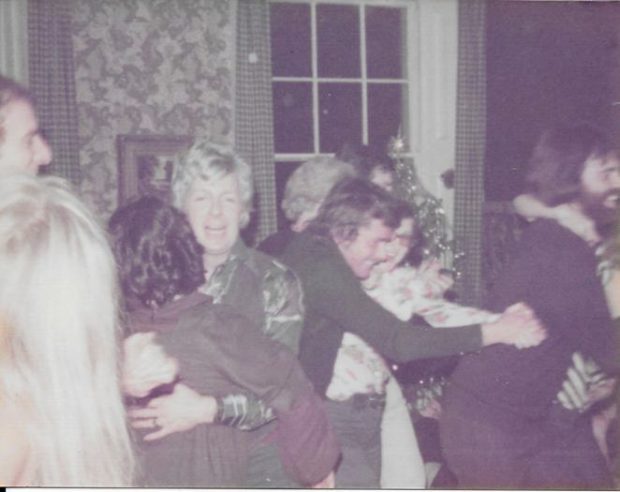
16 Warwick Square
Warwick Square was laid out in the mid-1840s and took approximately 25 years to complete.
In the early days of many of the squares in Belgravia and Pimlico, there were difficulties in attracting the ‘right sort’ of occupants. Aristocratic, monied people did not want to move into the grand houses while the rest of the square was a building site, and further problems were caused by the threat of squatters breaking in and occupying the new empty houses. Some of the houses (e.g. no.15 next door) were therefore occupied, presumably at a lower rent because of the building site, by working people. However, no.16 was first occupied in the very early days by a doctor/physician who appears to have been quick off the mark in setting up his practice in the developing neighbourhood.
1851
The first recorded occupants of number 16 were William Ord and his wife Elizabeth, with two servants, Mary Clark and Daniel Hussey.
William Ord was born in 1806 in Tynemouth, Northumberland. He is variously described in public records as a gentleman and/or a physician. His father was a ‘Surveyor in the Customs’.
Elizabeth Ord (nee Good) was born in 1796 in Hull, Yorkshire. Her father was a hairdresser.
William and Elizabeth were married on 20 August 1838. He was 32 years old and she was 42. They had both been married before and widowed. There is no record of any children from these first marriages. At the time of their marriage William and Elizabeth were living together in Queens Square, Bloomsbury. By 1841 William and Elizabeth were living in Islington and William had a medical practice in the area of the new Warwick Square development. It can be assumed that they moved into 16 Warwick Square soon after its completion.
The 1851 census for Warwick Square shows William at 45 years old, a practising M.D., and Elizabeth at 55. There is no record of any children.
There were just two live-in domestic staff at 16 Warwick Square in 1851. They were:
Mary Clark, described in the census as a house servant, was 20 years old, being born in 1831 in Calne, Wiltshire. Mary left domestic service when she married her husband George, but women named Mary Clark who married men called George are simply too numerous in public records to be certain of researching the right one.
Daniel Hussey was born in 1832, thus was 18 at the time of the 1851 census. He was possibly from the same general area of Wiltshire as Mary Clark. He is described as an errand boy whilst working at 16 Warwick Square.
Unfortunately, this episode in the life of 16 Warwick Square seems quite short-lived which, along with the lesser recorded late 18th and early 19th century births when record keeping was less thorough, would account for the lack of clear records. Doctor William Ord died of liver disease, indigestion and bronchitis on 11 June 1856 aged only 49. The reason he died at nearby 21 Denbigh Place, the home of other respectable professionals rather than at home is untraceable. His wife, Elizabeth, fades from the public records, though it is possible she stayed at Warwick Square until her death aged 72 in 1868. The two members of staff, Mary and Daniel are also untraceable in any accurate detail.
In fact, because much of the 1861 census has been destroyed by air raids and fires, even 16 Warwick Square fades from public records until the census of 1871.
1871
In 1871 we find a household headed by:
Robert Eden, born in Wimbledon on 12 May 1800, was a 70-year-old civil servant, retired from the East India Company.
Robert married Frances Mary Warburton in Cheshire in 1829. Their first son, Morton Robert Eden, was born the following year in India. Morton went on to be a career soldier in India, retiring in the rank of colonel to his own household in St George’s Square. He died aged 70 in 1900
Robert and Frances’ second son, Charles Henry Eden, was born in 1839 during a period spent in South Africa. Charles married a fellow passenger on the ship to Australia in 1863, where the newly married couple stayed and had two children. Charles described himself as a publisher when he was back in England a few years later, having published more than 20 books in the genre of ‘exploration literature’.
In 2025 the descendants of Eden brothers Morton and Charles appear to be living around the Home Counties.
Back in 1851 Robert and Frances were staying at Hollycombe House, Linch, Sussex, the guests of 80-year-old Sir Charles W Taylor, a Sherrif of Sussex. Even though the widowed Sir Charles had ten live-in staff, Frances still had her lady’s maid, Bristol-born Sarah Stoke with her.
At 16 Warwick Square in 1871, Robert (70) and Frances (61) had their son Charles (32) living with them, and six live-in members of staff. They are:
- John Hough, 33, was born a butcher’s son in 1838 in Hampton Lucy, Warwickshire. He was the butler at no.16 in 1871, a position he held for at least 25 years.
- Mary Ann Hedges, the cook, 41, was born in the London area in 1830. No other reliable information can be found among the many women named Mary Ann Hedges.
- Mary Patchin, 35 years old, born in Lewes, Sussex in 1836, was employed as a lady’s maid at no.16 for at least 20 years.
- Sarah Nelhams was a housemaid. She was 39, born in 1832 in Richmond, Surrey. It is not known how long Sarah worked at no.16, but she subsequently worked in various domestic service roles in and around Surrey. She was at least 80 years old when she died in almshouses in Richmond.
- Charlotte Elizabeth Worthington, 17 years old, born in 1854 in Melbourne, Australia, worked as a kitchen maid. She left domestic service to marry Harry Relph who described himself as a ‘Fancy Draper’ and ran a successful draper’s shop on Station Road, Taunton. They had three children and Charlotte died aged 78 in 1932.
- William Algernon Goodwyn was a page boy at no.16 in 1871. He was 18, born locally in Pimlico in 1853. He did not stay in domestic service. He married in 1879 and after a series of short-term jobs, he became a photo cabinet maker, a photo cabinet being a cardboard frame for a photograph. William and his wife, Myra, had six children, all of whom lived into adulthood, married, and had children of their own. William died aged 72 in the spring of 1925.
Back at 16 Warwick Square, the head of the household, Robert Eden, died aged 78 in 1879, leaving his wife, Frances, all alone in that great big house, with just her sister, her son, her grandson, and six live-in staff.
1881
Two years into her widowhood, Frances Eden, at 71 years old, was the head of the household at 16 Warwick Square.
Living with Frances were:
- Charlotte Leslie, Frances’ 66-year-old sister. She had married an Irish vicar in 1859 when she was 44 but was widowed and childless 10 years later.
- Charles Henry Eden, Frances’ son, aged 42, is the publisher who also appears on the 1871 census above. His wife, Georgina, has been untraceable for several years. Possibly she was in Australia, although she was back in England by 1900 when Charles died.
- Also at 16 Warwick Square in 1881 was Charles’ son, thus Frances’ grandson, Guy Ernest Morton Eden, aged 16, having been born in Australia in 1865. Guy went on to become a successful barrister with a house first on Eaton Square and then Eccleston Square, and a less-than-successful librettist of West End musicals. He has a full entry on Wikipedia.
The live-in domestic staff at 16 Warwick Square in 1881 were:
- John Hough, the butler who also appeared on the 1871 census return of the house ten years earlier. (He also appears on the 1891 census ten years later.)
- Henry Young was the 17-year-old footman. He was born in Farnborough, Hampshire in 1864. It seems probable that his time in domestic service at Warwick Square might have been part of a youthful adventure in the big city. Before and after his time in London he worked for his father’s cab company as a driver. He married in Farnborough and stayed there, and in his later years, he became a gardener.
- Mary Patchin, the lady’s maid, also appeared on the 1871 census return of the house ten years earlier. (She also appears on the 1891 census ten years later.)
- Rachel Laskey was the 38-year-old cook at 16 Warwick Square in 1881. She was born in 1843 in Norwich, Norfolk. Rachel spent her whole working life in domestic service, and when she was in her mid-fifties she married a similarly aged, similarly single plumber back in Norfolk.
- The general housemaid at this time was Sarah Mortimer. Sarah was 27, having been born in 1854 in Greenwich. At the last count, there were 5,624 public record entries for women named Sarah Mortimer, but the one born in Greenwich in 1854 is nowhere to be found.
- Ellen Matthews was the 17-year-old kitchen maid. She was born the daughter of a laundress in 1864 in Malvern, Worcestershire. A few years later, Ellen was back in Worcestershire, an unmarried mother of a son, working as a dressmaker.
1891
By 1891, Frances Eden, the head of the household, was 81 years old, and 12 years into her widowhood. She no longer had any family members living with her, but she did have six live-in members of staff.
- The cook was 50-year-old Mary Ann Godfrey. She was born in 1841 somewhere in London.
- Mary Patchin was employed as a lady’s maid at no.16 for at least 20 years. She never married, and she retired back to Sussex where she died in 1931 aged 95.
- Jane Sentance was a housemaid. She was 26 years old, having been born in Lincolnshire in 1865. Jane appears twice on the 1891 census; once as the housemaid at Warwick Square, and again in what appears to be a very mixed rooming house in Marylebone where the house manager appears to have simply given the census enumerator a list of everyone who rents a room in the house. Jane, at 26, is quite old for a housemaid. Maybe she had permission to go off-premises if her work allowed. The servants’ rooms at the top of 16 Warwick Square were quite small. (I know. I went up there several times in the 70s to visit our upstairs neighbours. Hardly anything had been changed. They would certainly have not had much privacy.) Still, Jane should only be registered at the address where she spent the night of 5 April 1891, when the census was taken.
- John Hough, had been the butler at 16 Warwick Square since before 1871, a position he held for at least 25 years. He retired to Warwickshire, and in 1911 was 75 years old, unmarried and living with his widowed sister. He died in 1916.
- Amy Watts worked as a kitchen maid at 16 Warwick Square in 1891. She was 17, having been born in Chelsea to a teenage single mother in 1874. The rest of her life story is indistinguishable from the life stories of all those other women by the name of Amy Watts.
- Isaac Allen was the 17-year-old hall boy. A hall boy ran errands, did the most disagreeable jobs such as emptying chamber pots, and served as a servant to the higher-ranking servants. Isaac was born in 1874. His family lived first in Queensberry Mews in South Kensington where his father and many of the neighbouring men were coachmen, keeping the horses and carriages in the stables below and living in the rooms above. Isaac’s father moved his family to Pimlico where he continued his work as a coachman. Isaac served in the First World War working with horses, after which he became a coachman like his father and lived the rest of his life into the 1940s in Childs Place in Earls Court. Inconsistent records might suggest an unhappy marriage.
Back upstairs at 16 Warwick Square, the head of the household, widowed Frances Eden died, at home aged 88 on 11 January 1898. She left £2854 5s. 8d to her son Morton, who by now was a retired colonel already in possession of a small fortune, rather than her other son, Charles the author who, at least on paper, needed it more. That sounds like a family feud. Frances had lived at 16 Warwick Square for approximately 20-25 years and kept the same butler and lady’s maid for all that time.
Three years later, it was all change at 16 Warwick Square.
1901
Charles J Willock, 38, was born in India in 1863. He studied at Trinity Hall, Cambridge and became a barrister at law. He married Elinor Maud Wilcox on 15 August 1890 when Charles was still a law student. Born in India to a British army family in 1868, in 1901 Elinor was 33 years old.
Charles and Elinor’s son, Guy Charles Boileau Willock was born in Richmond, Surrey on 11 December 1891. However, at the time of the 1901 census he was a 10-year-old boarder at a ‘tutor school’ (preparatory school) run by Thomas Mason in Rottingdean. The school eventually became St Aubyns School and closed amidst great controversy in 2013. Investigations remain ongoing.
Charles and Elinor had a telephone at 16 Warwick Square. The number was VICtoria 1353. (You dialled the letters by dialling the numbers on the same spot as the letters. You had to be there.) (When I lived at 16 Warwick Square the number was 01 834 7974.)
On 4 June 1902, Elinor died an accidental death. According to her death certificate she ‘fell into the River Thames and was partly strangled by the velvet she wore round her neck and partly drowned by accident’. She was 34. Charles became a 39-year-old widower, and Guy was just 11 years old when he lost his mother.
Back at 16 Warwick Square in 1901, there were four members of live-in staff. There is no registered butler, and all the staff are women and all in their 20s. They are:
- Ellen M Cotton, 28, born in Bow, London in 1873 was the cook. Ellen appears to have spent her entire working life in service, eventually dying unmarried aged 90 in 1963. Ellen appears to have been a conscientious voter. She appeared on electoral registers for as long as she was legally entitled to vote.
- Susan Jacobs, 28, was born to general labourer Henry and charwoman Ann in Whippingham, Isle of Wight in 1873. She was the parlourmaid at 16 Warwick Square. One of her earlier jobs before she went to London was as a housemaid to a grocer and confectioner on the Isle of Wight. The rest of her life story gets muddled with all the other Susan Jacobs in London in 1901.
- Lilian Northan was 21 when she worked as a housemaid at 16 Warwick Square. She was born in Plumstead, Kent in 1880. Like her colleague, Ellen Cotton, Lilian’s name appears annually on electoral registers from as soon as she was legally permitted to vote, though it cannot always be certain that they are all the same person. Unfortunately, Lilian’s enthusiasm for her democratic rights crowds out any other information that might help us learn about her life.
- Born in Corscombe in Dorset in 1878, Alice Ada Hawkins was a 23-year-old housemaid. Like me (also born in Dorset) she comes from a long line of agricultural workers. She had five sisters and three brothers. Alice left domestic service to marry 27-year-old Metropolitan police officer Charles Youngs Robinson on 19 Jun
Moving forward a couple of years, the widowed head of the house, Charles Willock married for a second time. On 7 April 1906, he married widowed Edith Mary Gibbs. He was 43 and she was 36, having been born in Penge on 14 January 1870. Edith had been married in India for just four years, where her husband, Captain Hugh Robert Campbell Barber was a captain surgeon with the Indian Medical Service. Edith and her husband lived their four years of marriage in India when he died aged 32 in 1896, after which she returned to England. Edith was childless and had been widowed for ten years when she married Charles.
Charles and Edith had a daughter, Joan Mary Boileau Willock, born in 1908.
1911
Charles J Willock was still the head of the household at 16 Warwick Square in 1911. He is still practising as a barrister.
Edith Willock was not registered anywhere on the 1911 census. There are at least two possible reasons for this. Either she was out of the country, or she refused to enter her details on the census form. Many women did so in 1911, in protest that not all women had not yet been given the right to vote. On the night the census was taken, 2 April 1911, tens of thousands of women boycotted the census. Some hid for the night, and some wrote messages on their census form, such as ‘I don’t count so I won’t be counted’ and ‘If I am intelligent enough to fill in this census form, I can surely make an x on a ballot form’. The census form for 16 Warwick Square is completed as far as possible (it wasn’t completely possible, see below) as required by the law and it is all done in the same handwriting. Whereas, on the equivalent form next door at number 15 each line is in different handwriting which suggests that they have been left for each of the women in the house free to choose their own response.
Guy Charles Boileau Willock, Charles’ son by his first marriage, was living at 16 Warwick Square in 1911. After prep school in Rottingdean, Guy went on to be educated at Eton and King’s College Cambridge. He went into the 18th (County of London) Battalion (London Irish Rifles) at the outbreak of the First World War and was killed in action on 25 Sep 1915. He was 23 years old. He left his £945 to his father, Charles.
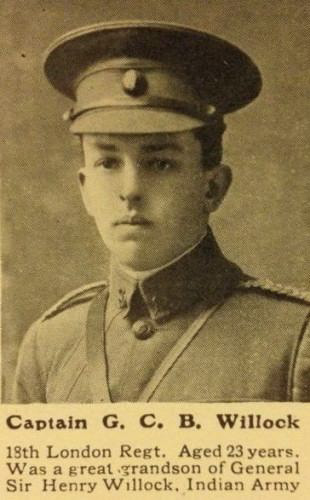
Joan Mary Boileau Willock, Charles and Edith’s daughter was 3 years old and living at 16 Warwick Square in 1911. (The ‘Boileau’ name she and Guy had was descended from French refugee ancestors.) She was 7 when her half-brother Guy was killed in the war, and 11 when her father Charles died.
By the time of his death in 1919 Charles was staying at Elderton Lodge, Thorpe Market in Norwich, Norfolk (now operating as the Gunton Arms Hotel.) However, he died at the Royal Pier Hotel, in Ryde, Isle of Wight.
Edith and Joan had also moved to Norfolk. Joan went to boarding school there, while widowed Edith lived with two live-in staff.
Some years later, at the outbreak of the Second World War in 1939, Edith was doing ‘unpaid domestic duties’ and living in Sussex with two Austrian refugees who are described in official documents giving them permission to stay in the UK as ‘internees at liberty’ and were working locally in domestic service. Meanwhile, Joan was married and living with her children and live-in staff in Devon. On 2 January 1952, the Torquay Herald Express reported that Joan was fined £3 with £1 7s. 7d. costs and a license endorsement for dangerous driving. She said that the accident happened because of ‘a chain of circumstances’. She was driving a new car with the children in the back ‘in a riotous mood’. She explained, ‘I looked to the right and looked to the left, but I didn’t look right again.’ She had been fined £2 the previous year for not stopping at a halt sign.
Edith died in 1949 and Joan in 2001.
Meanwhile, back at 16 Warwick Square in 1911, the live-in staff were all female and all refused to give their full details for the census form. The form was completed as far as possible by Charles Willock. Being a barrister he would not have been keen to break the law. He, therefore, filled in the details as far as he knew them, i.e.:
- Mary Mors, 32 born about 1879. Nurse
- Alice Bunn, 27, born in Baldicots, Hertfordshire in 1884. Parlourmaid.
- Emily Ward, 30, born about 1881. Married. Cook.
- Christine Fritzjohn 29, born about 1882. Parlourmaid.
- Winnie Underwood, 17, born about 1894. Kitchen maid.
- Kate Hindwich, 21, born about 1890. Under Housemaid.
Charles wrote an explanation on the side of the form: ‘I can fill in no further details as the servants decline to give me any information as a protest that women are not given a parliamentary vote.’ As a result, the only public record that any of these women can be found on with confidence is this very 1911 census form on which they refused to give their full details. Here’s hoping they all lived long enough to be proud and conscientious voters.
Thus ended the ‘upstairs/downstairs’ arrangement at 16 Warwick Square.
It goes dark during the First World War and does not come back into view until 1921.
1921
16 Warwick Square became what the parlance of the day might have described as a ‘respectable boarding house’ or maybe it was a ‘guest house’. On the night the 1921 census was taken, 19 June 1921, ten people were registered as staying overnight in the house, including a newborn baby.
The boarding house, (or was it a guest house?) was headed up by a 56-year-old Scottish widow, Frances Mallock. Other than appearing on the 1925 electoral register, still living at 16 Warwick Square, Frances’ records disappear among all the other women with the same name. She did, however, have two daughters, one of whom, whilst not appearing on the 1921 census was a registered voter at 16 Warwick Square.
Frances’ daughters, Beatrice, born in 1897 in the Croydon area, and Edith, born in 1900, also in Croydon were both baptised on the same day, 25 March 1916, when Beatrice was 19 and Edith 15, which might be seen as quite old for a baptism when most children at the time were baptised as new-born babies. One explanation might be that Frances was separated from her daughters’ father and her new partner was committing to looking after his new family and they were doing it in the closest legal way available to them, thus the merging of their names Murray and Mallock.
Frances lived at 16 Warwick Square until at least 1925, by which time at least one of her daughters is living there with her husband and child.
Beatrice Murray Mallock does not appear on the 1921 census for 16 Warwick Square but she is registered as a voter there. On the 1920 electoral register, she describes herself as ‘Lady’ Beatrice Murray Mallock, which sounds like a dig about women’s votes. Either that, or she’s just getting ideas from living in such a grand townhouse. On 23 Apr 1921, Beatrice married Archibald William Hastings in Bombay. (See below). She lived at 16 Warwick Square until at least 1925 by which time her husband had joined her there, and she probably had their baby son there too.
Edith Murray Mallock, Frances’ other daughter, married one of the other ‘guests’, Maurice Watts, in October 1921. See below.
Everyone else who appears on the 1921 census for 16 Warwick Square is described as ‘Visitor’ even though some of them were there for two or more years and were registered to vote there, and at least one had their own telephone. Unsurprisingly for the time, there are many connections with India, education and military service. The ‘Visitor’ list lists
Maurice Emygdius Watts (11 June 1878 – 22 February 1933) was an Indian lawyer, civil servant and administrator. He was born, brought up, and educated in Madras and after graduating in law, entered the Madras provincial service in 1901. However, he went to England as a young man and first appears on English records in 1911 as a 32-year-old boarder in Woburn Place and working as a superintendent in the finance department in the Indian embassy in London. It is not clear when he moved to 16 Warwick Square, but his telephone number there was VICtoria 1075. He married Edith Murray Mallock, his landlady’s daughter (see above), in October 1921 when he was 42 and she was 21. Unfortunately, according to the Daily Telegraph of 24 July 1928, the marriage was short-lived owing to Edith alleging that she had lent Maurice £2,075 which he had failed to repay to her. He was out of 16 Warwick Square by 1924 and back in India by 1925 where he served as the Diwan of Travancore until 1929. He went back to England at some point and died on 22 February 1933 in London, aged 54. His estranged wife reverted to her chosen name, Edith Murray Mallock, and more or less disappears, though she does turn up in 1939 living with a widowed company director in Cumberland Mansions, Marylebone. She lived until 1987.
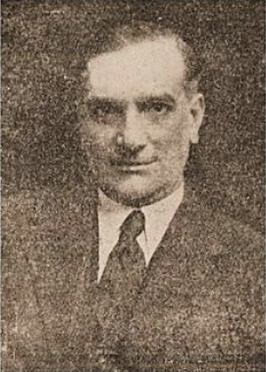
Harry Cousins was born the ninth of ten children to a schoolmaster and his wife in Penge in 1871. He worked variously as an insurance clerk, and journalist, and from 1900 for a year as a soldier in the Boer War in South Africa. He registered as a ‘Reserve’ during the First World War but he was at the upper age limit for soldiers on active service. However, he was discharged and returned to civilian employment after a horse fell on him during a training exercise. He wasn’t seriously injured. Even though Harry is listed as a ‘Visitor’ in the 1921 census for 16 Warwick Square he was registered as a voter there from at least 1919 until about 1925. By 1933 Harry was living with his sister Alice and his brother, Arthur (see below) in Edith Road, South Kensington. He lived there for the rest of his life, never marrying, and living until he was 81 in 1952. He died in Worthing and left his money to his brother Octavius.
Arthur Cousins, the eight-years-older brother of Harry (above), was born in 1863. He followed in his father’s footsteps and became a school teacher (as did three of his brothers). He attended Jesus College, Cambridge from 1881 and he spent 1904 to 1909 tutoring in Switzerland He was 58 years old in 1921 and was the principal of St Paul’s School in Barons Court from 1914 to 1925. He lived to be 85 and died in Worthing in 1949.
As a side note, of the other eight siblings of brothers Harry and Arthur, the three sisters never married, two brothers never married, and one brother married a 32-year-old woman when he was 60, but the marriage ended in divorce which must have been a great scandal in such a respectable family. The unmarried siblings lived with each other in shifting arrangements, usually with an elderly uncle and a selection of respectably impecunious cousins. One brother completed an agricultural degree and disappeared to somewhere in Africa. Another (the youngest) brother married, had children, worked as a bank manager and died, all without leaving Penge.
Back to 16 Warwick Square, 1921.
William Minshull was another registered ‘Visitor.’ He was born in Southport, Lancashire, the son of a music teacher, in 1885. He was a registered resident in India in 1908 working for the East India Company. He travelled from India to England in September 1920 on the ship named Mantua, operated by the Peninsula and Orient Steam Navigation Company Ltd. At the time of the 1921 census when he was at 16 Warwick Square he was registered as a civil engineer with the Indian Government. He left England again on 20 January 1922, travelling 2nd class on the Morea, operated by P & O. In 1926 at the age of 42 he married 26-year-old India-born Effie Cumming in Bombay. By 1939 William was a retired canal engineer living with Effie in Cheltenham and registered as a volunteer ARP warden (Air Raid Precaution). William and Effie lived in Cheltenham into their eighties, dying within a year of each other in 1970.
Richard Henry Blaker was 55 at the time of the 1921 census, having been born in India in 1866. He described himself as a civil servant in the Board of Education. He married in India on 21 March 1892 when he was 25 into another Anglo-Indian family, that of 23-year-old Ethel Maria Buckner. They had a large and sociable extended family, among whom he was known affectionately as ‘Uncle Hen’. There are many photographs of their Christmas family parties and summer sojourns. Richard and Ethel had a son and they seem to have lived a quiet life in India. However, they travelled from India on the ship City of Cairo, operated by Ellerman City Line, and docked in London on 4th November 1920. When the census was taken in 1921, however, Ethel is untraceable. Richard is staying at 16 Warwick Square not with his wife but with his sister, Elen Blaker (See below.) Richard and Ethel left Warwick Square and by 1924 were registered in Streatham. From 1927 they were living in Camberwell but they moved house annually around Camberwell, Dulwich, Lambeth and Wandsworth. Richard lived until 4 February 1940, by which time he was living widowed with dementia in a care home in Brighton.
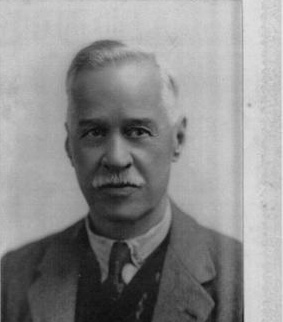
Eleanor Maud Blaker (registered as ‘Elen’, known to her family as ‘Tot’), was born in the Punjab, India in 1874, making her eight years younger than her brother Richard (see above.) She was working, like her brother, for the Board of Education as an Inspector of Schools and appeared on the Gravesend and North Kent Hospital register as a qualified physiotherapist and masseuse. Little else is recorded about her life. She never married and she never appears on an electoral register or any other census. She lived until 1935.
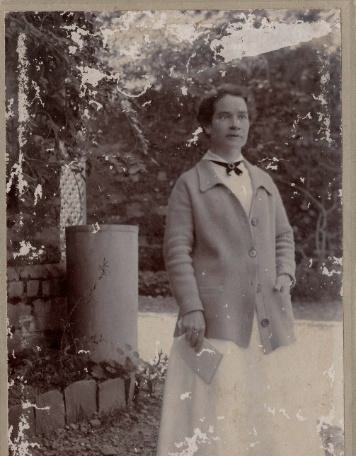
Emily Tomkins (nee Ridgers) is registered on the 1921 census for 16 Warwick Square not as a ‘Visitor’ but as a ‘Servant’ and she describes herself as a ‘Housekeeper.’ She was born in Salisbury, Wiltshire, the daughter of an agricultural labourer in 1867 but within the decade, agriculture going through a period of mechanisation, Emily’s father had moved his family to Stepney and become a factory worker. Emily went into service, at one point as a general domestic worker in the home of a mercantile clerk in Willesden. She married 30-year-old labourer Thomas Gurney in 1894 and had two daughters, Emily (Millie) (1888) and Mary (1899). She subsequently married Goerge Tomkin in 1913 although, not unusually for the period, there is no record of divorce from Thomas who by 1921 was a road sweeper. Emily Tomkins was 54 years old when she was the housekeeper at 16 Warwick Square in 1921.
Mary Brewer (nee Gurney), Emily’s second daughter, was registered as a ‘Visitor’ at 16 Warwick Square in 1921. She had married George Brewer in July of 1920 and given birth to their son Eric in April 1921 in Portsmouth, just a few weeks before the census was taken. George was serving on H.M.S Maidstone, a submarine depot ship. They had one other child, a daughter, and lived the rest of their lives in Devon.
Eric Brewer, Mary’s son, Emily’s grandson, was 2 months old when the census was taken. He went into the R.A.F. and travelled widely, with his home and base in Devon his whole life.
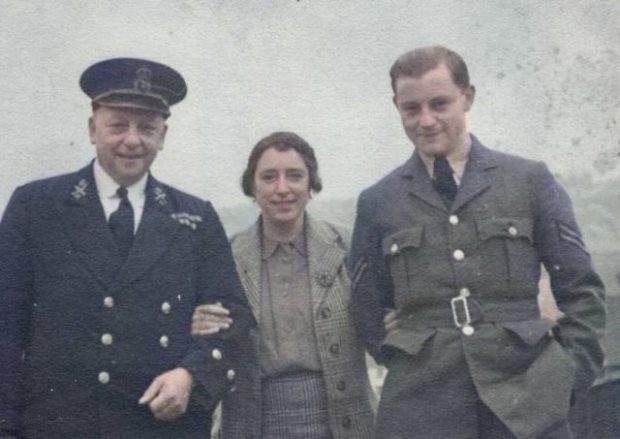
Some people were registered at 16 Warwick Square as voters but did not appear on the 1921 census. They are:
Frederick Hugh Clark, born in Middlesborough, Yorkshire in 1882, was a pupil at Ackworth School, a Quaker boarding school, also in Yorkshire. He married Mary Elizabeth Hawley, a bootmaker’s daughter in 1906, and their son, Wilton Hawley Clark, was born in Batumi, Russia the following year. Frederick was a civil engineer and it may be that he was in Russia working on the Baku-Batumi kerosene pipeline which opened on 24 July 1907. Frederick enrolled as a cadet in the army on 11 April 1918 but was discharged for misconduct nine months later.
Mary Elizabeth Clark, (nee Hawley), Frederick’s wife, was born in Derbyshire in 1887. Even though Frederick and Mary were registered voters at 16 Warwick Square in 1921 they are both untraceable on the census of the same year. They were not long in Warwick Square. They both disappear from public records and/or get mixed up with all the other Frederick/Mary couples in the archives.
George Tomkins (Emily’s husband. See above.) Also registered as a voter at 16 Warwick Square but not traceable on the 1921 census or any other public record.
1924
Unsurprisingly, three years after the 1921 census there were a few changes to the occupancy of 16 Warwick Square, traceable on the electoral register. New in the boarding house are:
Jean Duncan-Lee. Look up this person’s name, along with Jean Duncan or Jean Lee, and thousands of unverifiable records are returned, making it impossible to find out who they were. This is the only time this name appears in connection with 16 Warwick Square.
Thomas Dalgleish Fairgrieve was Scottish, born in 1892. He was an arts student in Edinburgh before enlisting in the army during World War One. He was wounded in action in France in October 1917 and again in Salonika in August 1918. He lived at 16 Warwick Square for a short period between 1924 and 1925, before marrying Eleanor Mary Halcombe in Devon in 1925. The wedding and what everyone wore was reported fully in the Western Gazette. They honeymooned in Scotland before making their home in Uxbridge. Finally, Thomas went back to Scotland and lived to be 96 years old.
Thomas Hutson and David Milne came and went to and from 16 Warwick Square over such short periods that the only evidence they were there was the 1924 electoral register. Many of the people who passed through the house had family, work, or military service overseas and their paths are often difficult to discover.
Archibald William Hastings was born on 18 Aug 1889. Archibald was an officer of a military finance department in India. He married the 16 Warwick Square landlady’s daughter, Beatrice Murray Mallock on 23 Apr 1921 in Bombay, and their son, James Stuart Hastings was born in England in the January of the following year.
The 1920s pass, most of the 1930s pass, and 16 Warwick continues as a guest house. In 1931 the house, managed by a Miss Bradshaw (see below) was occupied by several respectable unmarried ladies. They stayed at 16 Warwick Square just long enough to register to vote, so no more than a year or two.
A fuller picture of the house is given in the 1939 register which was taken on 29 September 1939. The information on the register was used to produce identity cards and, once rationing was introduced in January 1940, to issue ration books. The register continued to be used for official purposes and by the NHS into the early 1990s.
1939
16 Warwick Square in 1939 was occupied by ten unmarried women and a gay man. The only two married women connected with the house were two of the staff who lived off-premises and came to work every day and number 16.
Laura K Bradshaw (born 22 March 1877) and her sisters (see below) had lost their father in 1888 when they were children. The Surrey Advertiser described John Bradshaw as being in ‘a delicate and precarious state of health’. John had been described professionally as a ‘South American Merchant’. Laura’s widowed mother lived ‘by her own means’ which means she was wealthy enough to run a comfortable household at 38 Kensington Gardens Square with several live-in staff. Indeed, John left her £36,578 18s 9d in her will (the 2025 equivalent of £3 to £5million). However, by 1921 Laura and her sisters Edith and Frances, whilst living in their mother’s household all worked as secretaries; Laura for the Marquess of Northampton, Edith for the Central Fund for the Prevention of Tuberculosis, and Frances for an unreadable company on Victoria Street. Whether this was to supplement the family income or to strike out as independent women is not clear. Their mother died in 1931 and left her remaining £735 9s 10d to her son, the elder brother of Laura, Edith and Frances. It would be interesting to discover how Laura’s mother’s wealth depleted so thoroughly over the years. Were there no sensible investments? Were they affected by the aftermath of the 1929 Wall Street Crash? Laura and her sisters either did not want to or could not afford to stay in the family home, and thus, the same year, Laura became the proprietor of the guest house at 16 Warwick Square.
Edith C Bradshaw was born on 25 February 1878. In 1939 she was working as a secretary to a charity (unnamed in her register entry). Sister to Laura (above) and Frances (below) these women remained unmarried and mostly lived together into their 80s when they died in Hampshire in the early 1960s.
Frances E Bradshaw was born on 21 September 1884 and was a welfare worker.
Margaret Martin was born on 18 July 1917 and lived at 16 Warwick Square in 1939 with the three Bradshaw sisters. She worked as a dance teacher and registered for the war effort as a volunteer ambulance driver. By 1959 she had been married to a man called Winstanley and was sharing a flat in Sloane Garden not with him but with three other ladies, in a re-cast repeat of her Warwick Square arrangement. Their story is undiscoverable.
The 16 Warwick Square guest house had a live-in house parlour man and two daily staff. They were:
William C Cockram, born Merthyr Dyfan, Glamorganshire, Wales on 12 March 1901, William was 38 years old and single when he lived at 16 Warwick Square and worked there as the house parlour man. He was still there in 1941, but he married Ivy Pyne in Taunton in 1942 when he was 41 and she was 38. William was remanded in custody in 1949, charged with indecent behaviour with another man. Whether or not the case came to trial is unclear. (Homosexuality remained illegal until 1967, and even then the ‘freedoms’ were limited to two consenting adults (over 21) in private (i.e. a privately owned home; not hotel rooms etc.) When I moved into Warwick Square aged 16 my sexuality was illegal until midway through my time there when I turned 21 and ‘became legal’. It was like having a weight taken off my shoulders. I had a fantastic 21st birthday party!) Anyway. Whether or not William and Ivy stayed together until he died in 1977 is not recorded. They married late, so it would not be unusual for the time, for the two of them to marry for companionship after a life in domestic service. Marriage was also a convenient screen for both of them for different (or similar) reasons. Hopefully, they were good friends.
Minnie Jones, born on 11 November 1895, so was 44 years old and married when she worked as a housemaid at 16 Warwick Square. Her records are lost in the mists of Minnies and Joneses. It looks as though she would marry for the second time to a Mr Joshua.
Daisy E. Alder was born, according to the 1939 register, on 9 July 1896 making her 43 years old when she was the housekeeper, but in fact, she was born on 9 July 1918, making her 21. Young for a housekeeper. Her father was variously a key cutter and a hotel porter Daisy married her husband George Edward Townly Rivett when she was 16 and he was 18. While Daisy worked at 16 Warwick Square, she and George lived in Ennis Road, Finsbury Park. George was a metal worker, which with a name like Rivett, is quite fitting. After the war, they lived in Camden Town into the 1950s before going up to South Shields.
Other residents at 16 Warwick Square in 1939 were:
Maria Loring. Born 6 October 1877. Maria fell on hard times when she was in the Southwark workhouse for a week from 11 to 17 Nov 1902. However, she went on to become a career nurse. In 1911 she was a staff nurse in the isolation hospital in Muswell Hill, and in 1921 she was the matron at a holiday home in Thorpe Bay, Southend. When she was staying at 16 Warwick Square, she was retired. She died aged 83 in a rest home in Westcliff On Sea and left £108 to someone called Florence Pugh.
Elizabeth Sumpter was born on 21 August 1910 into a comfortable household with live-in staff in Norfolk. Her father was a Fijian-born medical G.P. and his wife was born in Cape Town, South Africa. Elizabeth was 29 years old when she lived at 16 Warwick Square and she was an artist. Her war effort work was in the Women’s Auxiliary Ambulance Service and she was in training for the W.A.F.S. (The Women’s Auxiliary Air Force was formed in June 1939 when war was imminent again. The WAAF came under the administration of the RAF and members served as individual members of RAF Commands. Initially, members of the WAAF were recruited to fill posts as clerks, kitchen orderlies and drivers, to release men for front-line duties. However, the occupations open to women recruits diversified as the war progressed.) Elizabeth never married. She retired to her native Norfolk and lived there until 1989.
Diana G Bracebridge was a vicar’s daughter, born on 31 March 1916 in Foleshill, Warwickshire, England. The Midlands County Tribune reported that Diana had been a bridesmaid at her sister’s wedding in October 1923. Apparently it ‘attracted considerable local interest’. The congregation sang ‘Onward Christian Soldiers’ and the couple went on a motoring holiday around Wales. Whilst at 16 Warwick Square Diana was working as a typist, but by the end of the war she was (like Maria Loring above) a trained and working nurse. In 1945 was a nurse at Guy’s Hospital. Diana never married and she continued nursing until her retirement. Wherever she lived, Diana always shared with groups of other women in what look on paper to be nurse’s homes.
Gladys Williams was born in Devon on 15 December 1910. A year later, her father was an electrical draughtsman at the docks in Gillingham and then he was with the Admiralty on Whitehall. In 1939 Gladys was living unmarried at 16 Warwick Square ‘on private means’ but she married Martin Lampard in Iringa, Tanzania on 2nd January 1941. The marriage did not last. He married someone else and Gladys called herself variously Williams, Lampard, Gomer and Gomer-Williams, which makes her story difficult to trace once all the other Gladys Williamses are factored in.
Elly van Alphen was born in Rotterdam on 18 January 1904. Her grandfather was the founder of the Oppenheim Bank in 1872. The UK 1939 Register on which Elly appears was taken on 29 September 1939, 26 days after the United Kingdom declared war on Germany, and 8 months before Germany invaded the Netherlands. Elly was working as a Secretary to the Information Bureau, presumably in preparation for the war. Toward the end of the war, she was back in the Netherlands, and in April 1945 she accompanied the Dutch Foreign Minister to the United Nations conference in San Francisco which met to draft the charter of a world security organization. Elly was awarded the Orde van Oranje-Nassau which was given by Queen Wilhelmina to those whose services had helped liberate the Netherlands from Nazi German occupation. Elly died in Rome in 1983 aged 79.
Audrey E Newhouse’s parents had been married in Shanghai in 1917 and Audrey was born on 29 April 1919 in Hong Kong. Her father was a civil engineer who, in his retirement, became a farmer. When the 1939 register was taken Audrey described herself as single and as working in ‘beauty culture’. Audrey married Kenneth Dyer in Dorking in 1941 and the two of them disappear into the public record melee of Audrey and Kens. Audrey lived in Malvern, Worcestershire until 2001.
Here we leave the 1939 residents of 16 Warwick Square to live through the war years. This research goes up to 1965, but there is living memory of 15 Warwick Square up until the late 1980s. That’s for someone else.